How to Prevent Falls in the Bathroom for Seniors (Simple Safety Tips That Work)
Falls in the bathroom are one of the most common causes of injury for seniors living at home. Wet surfaces, limited support, and tight spaces can turn everyday routines into serious safety risks.
After caring for my mother through dementia and mobility challenges, I saw firsthand how quickly a simple situation could become dangerous. Despite her showering independently in her own home, I realized I was unaware she felt unsure stepping into and out of the tub.
The good news is that most bathroom falls are preventable. With a few practical changes, you can create a safer environment and help seniors maintain independence and confidence at home.
Why Bathroom Falls Are So Common
Wet floors are one of the most common causes of bathroom falls. Water from showers, sinks, and wet feet can quickly create slippery surfaces that are easy to overlook. Strategies for preventing injuries here:
- Use a non-slip mat inside and outside the shower
- Remove loose rugs or secure them with non-slip backing
- Consider non-slip decals for added traction
- Keep floors dry by wiping up excess water
- While showering contain water spillage with sponges at the outside corners of the tub to absorb water.
From my experience, even one of these changes can make a noticeable difference in daily safety. For my mother I started with a large full cover textured suction bathmat in the tub, and she was much more surefooted after that addition.
Pro Tip: Choose high-contrast bath mats so they’re easier to see for seniors with reduced vision.
Improve Stability and Support
Bathrooms contain many hard surfaces with the potential for injury, and they often lack stable surfaces to hold onto, especially near the shower or toilet. Providing these stable items to hold on to will help to prevent injuries:
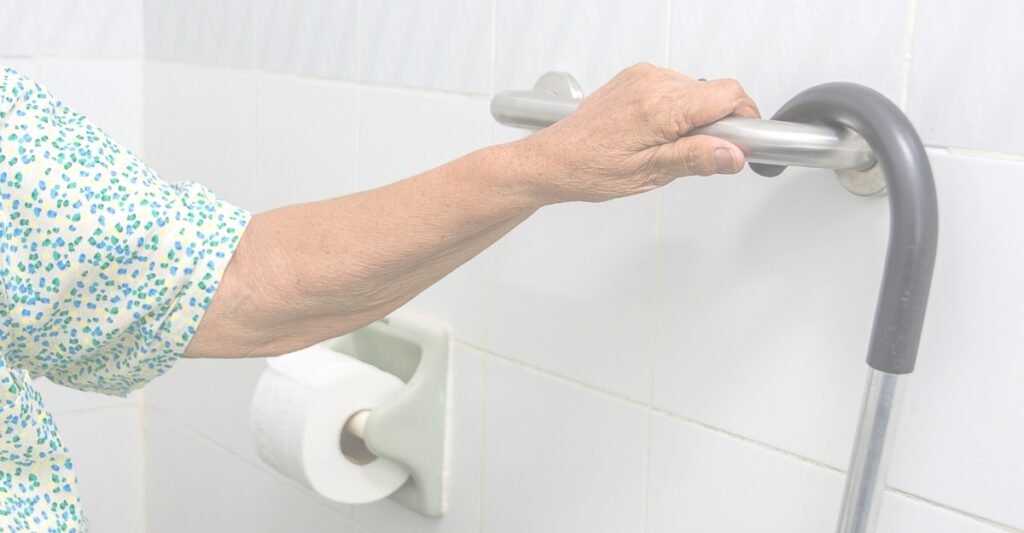
- Grab bars
- Raised toilet seat
- Shower chair or transfer bench
For my mother, we started out with a shower chair and replaced it with a transfer bench a few years later when her balance worsened. A transfer bench allows for sitting on the bench outside the tub, then sliding over the tub edge into the tub instead of having do do this while standing.
Reduce Slipping Hazards
Prevent slip injuries in the bathroom by:
- Using non-slip bath mats
- Removing rugs
- Installing non-slip decals
I have a shower stall with an unbelievably slippery glossy fiberglass base. After it was installed I realized the mistake I made when I picked it out, it was like stepping on slippery ice! I ended up using non-slip decals and they were almost invisible and worked very well.
Improve Visibility
Poor lighting combined with aging eyesight in seniors can lead to bathroom injuries with bumps and slips . Prevent injuries by improving lighting with these items:
- Nightligths
- Motion sensor lights
- Tub light (stick on, waterproof, and battery operated options exist)
Make Bathing Safer
Simplify bathing and showering by reducing the need to twist and turn. Use these items to make senior bath time safer and prevent injuries:
- Handheld shower head
- Shower seat
- Transfer bench
My mother initially shower safely without the shower seat, but a few years into her Alzheimer’s diagnosis, sensory issues developed and she wasn’t a fan of the water on her head. It threw her off and made her unsteady, that was when we purchased the shower seat. Years later when her mobility decreased further we replaced it with a transfer bench, which allows sliding from the outside of the tub to the inside while remaining seated.
Prevent Burns and Temperature Risks
Prevent hot water burns from faucets, showers, and tubs with the following:
- Reduce water heater temperature to 120°
- Use an anti scald device
- Install a Point-of-Use Thermostatic Mixing Valve
Keep Essentials Within Reach
Forgetting essential bath items increases fall risk for seniors if they need to leave the tub, possibly in the middle of a bath or shower, to retrieve items. Essential items to check include:
- Phone nearby
- List of emergency contact numbers
- Mini flashlight nearby in case of sudden power outages
- Shower mounted soap/shampoo/conditioner dispenser. These adhere to the shower wall and can be refilled with your own soap
- Toilet paper tower to hold extra rolls (store near the back of the toilet or out of the way so it doesn’t pose a tripping hazard)
- Weighted shower curtain–keeps water inside the shower to prevent slippery floor surfaces
- Small wastebasket
Pro tip: Shower mounted soap/shampoo/conditioner dispenser provide an added benefit of eliminating loose bottles that pose a tripping hazard or dropping them on the feet. They are also great for seniors who suffer from arthritis, or memory loss issues since the soap level is easier to see so you don’t forget and run out.
If you’re looking for specific products that can help improve bathroom safety, you can read my guide on the best bathroom safety products for seniors.
Conclusion
Preventing falls in the bathroom doesn’t require major renovations. Small, thoughtful changes can significantly reduce risk and make daily routines safer and more comfortable.
Starting early is key. Making these adjustments before they’re urgently needed can help seniors maintain independence and avoid preventable injuries. When my mother was living independently, my sister and I approached each hurdle as as the occurred, looking back now I wish we had been more proactive.