How to Make a Bathroom Safe for Seniors (Complete Guide)
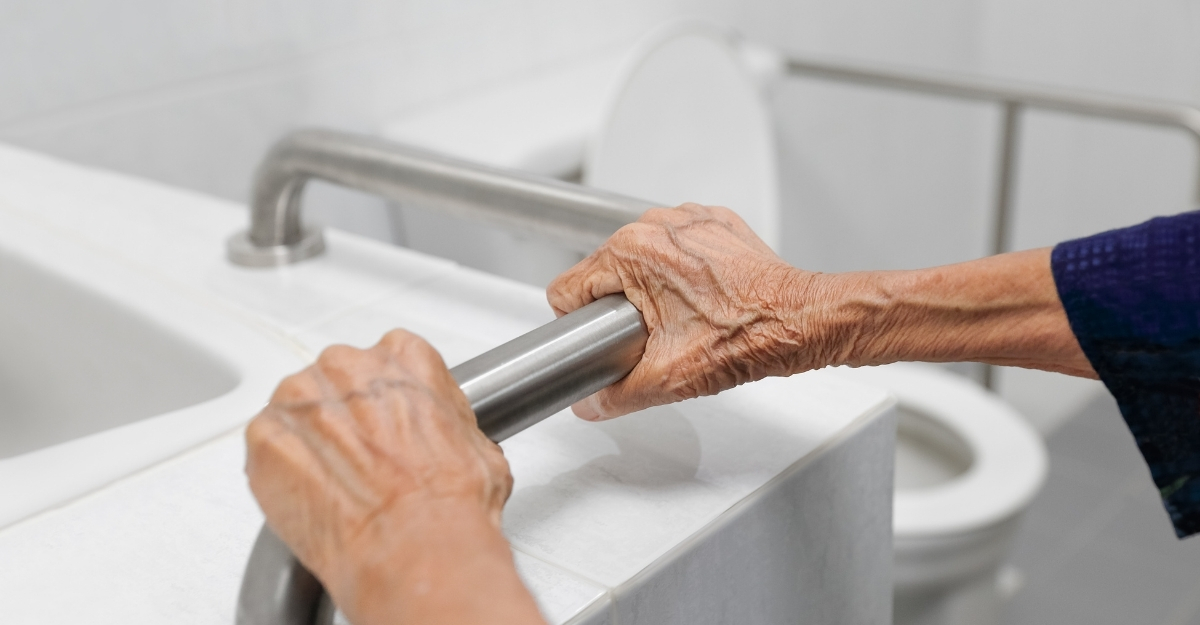
Bathrooms are one of the most common places where falls occur, especially for seniors.
Slippery surfaces, tight spaces, and the need to step in and out of tubs or showers can all increase the risk of injury.
The good news is that with a few simple changes, you can make a bathroom significantly safer and more comfortable.
In this guide, I’ll walk through practical ways to improve bathroom safety, based on real-world experience with my own mother–from when she was diagnosed with early stage Alzheimer’s and was living on her own, to the point where she came to live with me.
We made mistakes along the way, and hopefully my experience can help you to avoid these same mistakes.
Why Bathroom Safety Matters
Think back over your life, how many times have you slipped in the bathroom, or almost slipped? It’s happened to almost everyone. For seniors, the fall risk is increased, and the consequences of a slip and fall in the bathroom can be catastrophic.
Falls in the bathroom are especially dangerous because of hard surfaces and limited space to recover balance. I was surprised to learn that nearly 80% of all falls in the home occur in the bathroom. It makes sense though, when my mother came to live with me, that is where I noticed her nervousness and hesitation the most.
It made me wonder if she had fallen in the tub without me realizing it when she lived on her own.
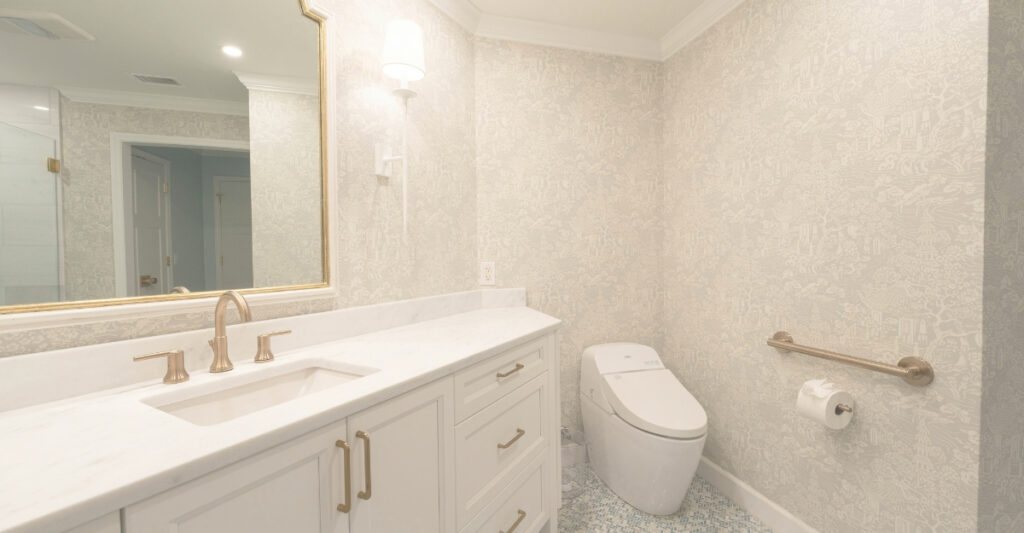
Start With the Biggest Risk Areas
Prevent Slips in the Tub or Shower
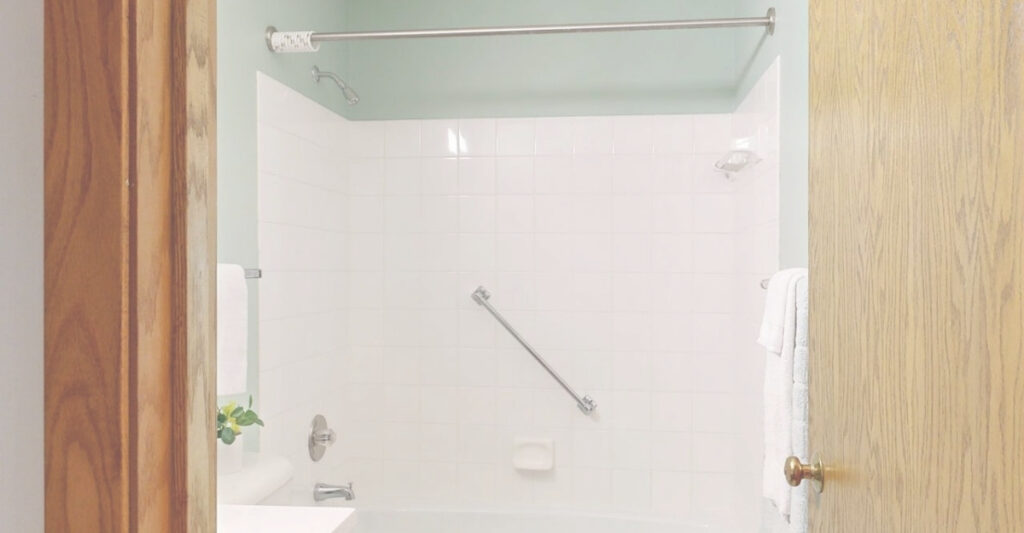
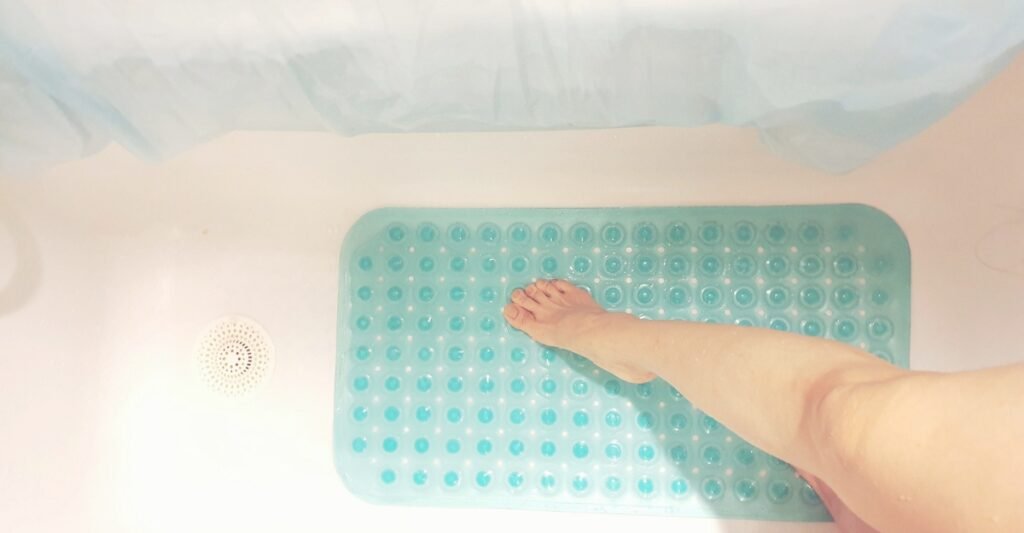
The biggest risk for injury in the bathroom is in the tub or shower. Slick bathtub or shower floors combined with soap suds, bath oils and conditioners make for an accident waiting to happen. An easy solution is to use a non-slip bath mat.
When I think back to my mother’s environment before she came to live with me. She didn’t have a bathmat. She had her old cast iron tub re-glazed and it was very smooth–it was an accident waiting to happen.
Once she came to live with me, it was one of the first things I realized I needed to purchase. It was a very easy safety boost.
One of the easiest ways to improve safety is starting with the right bath mat.
👉 Read my guide to the best non-slip bath mats for seniors
Add Grab Bars for Stability
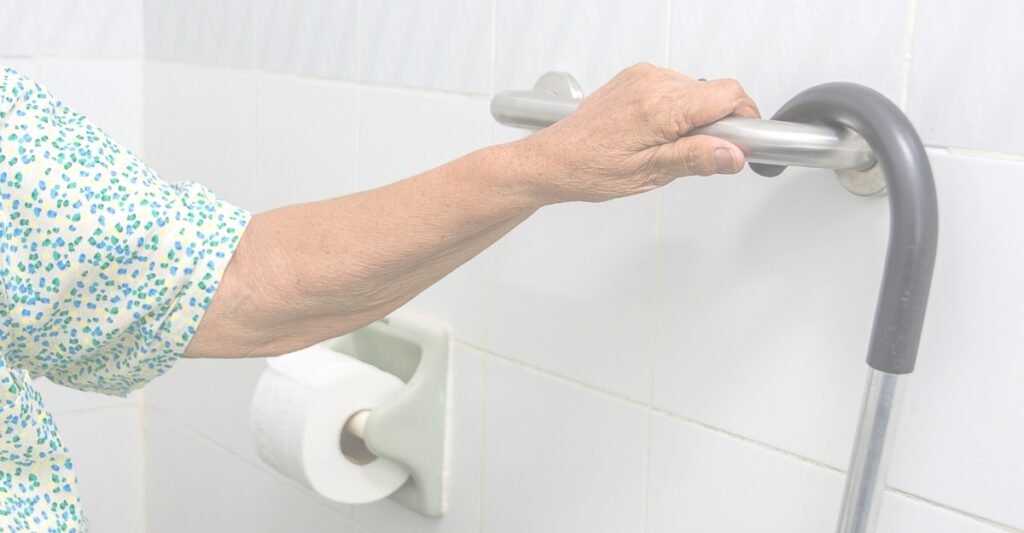
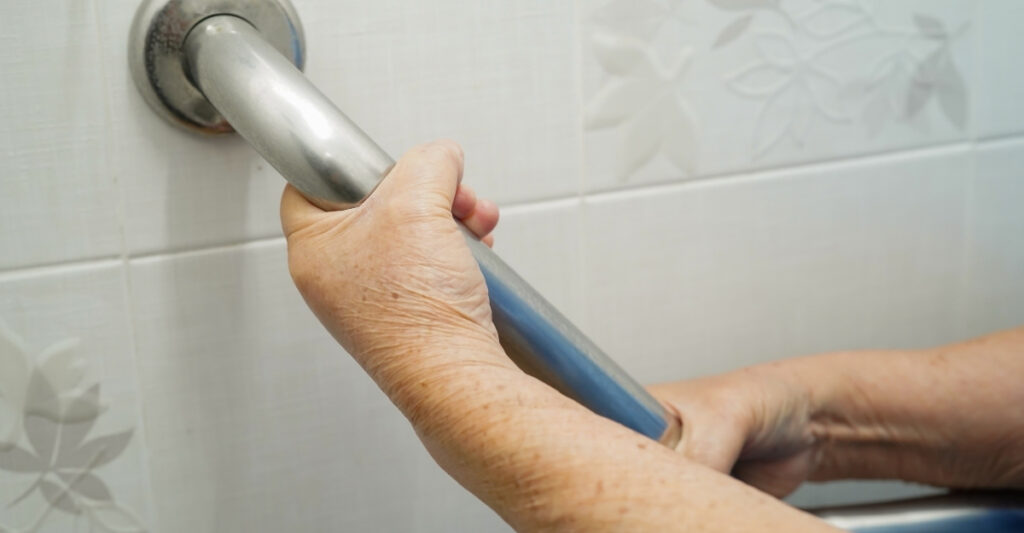
Many seniors have moments of instability due to balance issues, weakness or injuries. Grab bars provide a stable surface to hold onto to steady the balance when entering and exiting the tub. They can help with lowering onto or rising from the toilet. When installed on bathroom walls they can help seniors steady themselves when putting on or removing shoes and clothing.
👉 See the best grab bars for bathroom safety
Use a Shower Chair or Transfer Bench
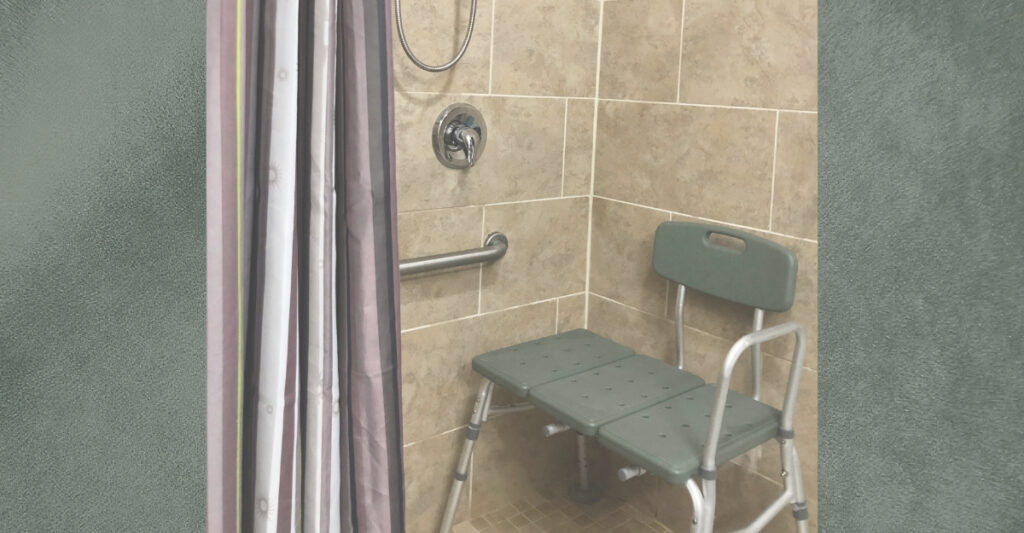
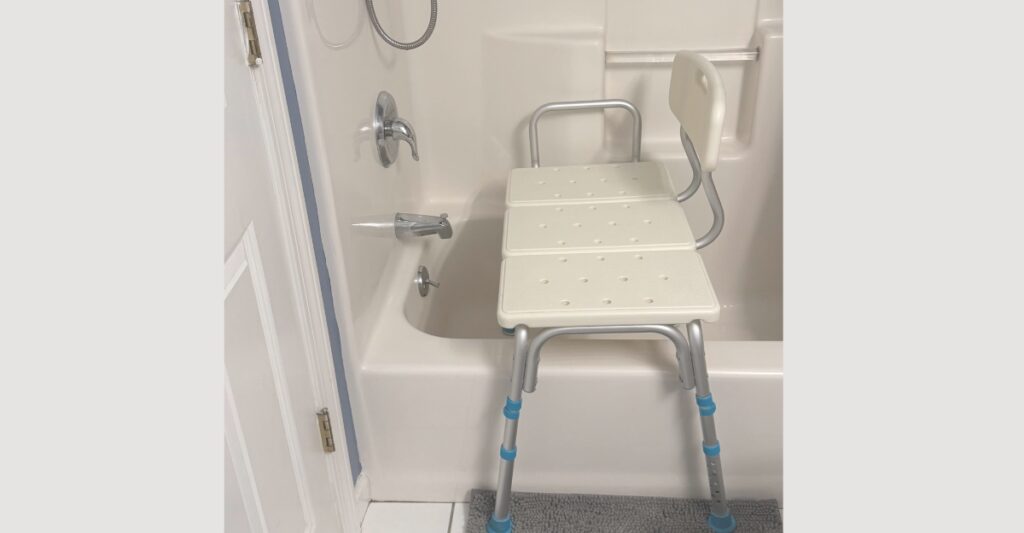
Shower chairs or transfer benches help keep seniors safe by providing support while they bathe. They prevent slips, falls, collapse and fatigue on wet surfaces.
Seniors can lose balance when they close their eyes when wash their face, or rinse shampoo or conditioner from their hair. A shower chair or transfer bench helps eliminate this risk and keeps them stable.
👉 Compare shower chairs and transfer benches for seniors
Improve Lighting and Visibility
Night time trips to the bathroom often become more frequent as seniors age. Dark pathways in combination with sleepiness and the reduced ability for eyes to adjust can increase the risk of falls.
Seniors are sometimes hesitant to turn on bright lights as they head to the bathroom, and that increases the risk of bumping into something and falling.
This happened to me last summer, I woke in the middle of the night and didn’t want to turn on a bright light on my trip to the bathroom. The room was pitch black and I banged into a side table that was sticking out a little more than usual. My knee slammed into the ground and I ended up with a huge black and blue mark 2 days later. I was lucky I didn’t break anything.
Imagine this happening to a senior. I’m sure we’ve all heard horror stories of a senior breaking their hip in a fall. The recovery from an injury like this becomes much more difficult as we age. A well-lit pathway can help eliminate some of the risk.
Reduce Clutter and Obstacles
A close evaluation of the senior’s home for trip and fall risks can go a long way towards keeping them safe. Loose rug edges pose serious fall risks, and edges should be secured with double sided rug tape made for this purpose.
Remove loose extension cords in traffic paths as these are a serious trip hazard.
Think “wide open spaces”, this may become especially important if and when the senior ends up using a walking device like a walker or rollator.
My mother’s home environment was actually good in this regard, she didn’t keep much clutter, except for piles of books on the hassock in front of her. When the day came when she moved in with me, I realized that my own home was problematic for her.
When she eventually needed a walker, I had to streamline my home and remove clutter and items that were blocking pathways. Plan ahead for this, as it can be a time consuming project depending on how much clutter has accumulated over the years.
Consider Layout and Accessibility
Evaluating the home layout for areas that may pose challenges for the senior.
Seniors may struggle to sit on or rise from a toilet seat that is too low.
Closets and cabinets with frequently used towels, linens, medicines, and first aid items should be placed within easy reach to avoid the risk of falling that reaching high or bending down
Narrow doorways and raised thresholds may pose risks, and hinder the use of walking devices.
Simple Upgrades That Make a Big Difference
Making a bathroom safer doesn’t require a full renovation.
Small changes like adding grab bars, using a non-slip bath mat, or introducing a shower chair can significantly reduce the risk of falls and improve confidence.
Start with the areas that pose the greatest risk and build from there.
I did a few of these upgrades for my mother when she was living on her own, but not enough. It wasn’t until she came to live with me that realized I needed to do more in order to keep her safe.
If you’re getting started, focus on the areas that pose the greatest risk first.
You can also explore the specific solutions I’ve covered:
👉 Best non-slip bath mats for seniors
👉 Best grab bars for bathroom safety
👉 Shower chairs and transfer benches for seniors
These changes may seem simple, but they can make a meaningful difference in safety and independence.